Jost Zetzsche Tool Kit

Thursday, March 06, 2008

Officespeak

This came in an email forwarded to me. Quite hilarious, the unusual translations.

Office Language.... ...

It's too good........ .

1.."We will do it" means" You will do it"

2."You have done a great job" means" More work will be given to you"

3."We are working on it" means" We have not yet started working it"

4."Tomorrow first thing in the morning" means" Its not getting done, At least not till tomorrow!"

5."After discussion we will decide-I am very open to views" means" I have already decided, I will tell you what to do.

6."There was a slight miscommunication" means" We lied"

7."Lets call a meeting and discuss" means" I have no time to talk now"

8."We can always do it" means" We cannot do it on time"

9."We are on the right track but there needs to be a slight extension of the deadline" means "We screwed up, we cannot deliver on time."

10."We had slight differences of opinion "means" We fought"

11."Make a list of the work that you do and let's see how I can help you" means" find a way out yourself, no help from me"

12."You should have told me earlier" means" Well even if you told me earlier that would not have mattered!"

13."We need to find out the real reason" means" I will tell you where your fault is"

14."Well Family is important, your leave is always granted. Just ensure that the work is not affected,"means," You are not going home unless you finish your job"

15."We are a team," means," Everybody shares the blame"

16."That's actually a good question" means "I do not know anything about it"

17."All the Best" means" You are in trouble"

Regards,
N.Raghavan

Sunday, July 08, 2007

Need to educate the client - 2

Need to educate the client - 2

The other day a new client of mine called me to his place for discussions. It seems he wanted a menu translated from English into German as well as into French. He represents a 4-star hotel, here in Chennai.

The requirement for translation into French was straight forward enough. He wanted the entire menu translated. But for translation into German he wanted to economize. He told me that the new menu in English was just a slight modification of the existing menu, whose German translation was already with him. I was to translate only the modifications. I asked him to give the modifications in a different color font. He agreed and emailed me the English menu.

I took up the French translation first and sent him the finished translation. Then I took up the second part of the assignment and then sent him the German translation duly incorporated in the original English menu. All he had to do was to copy paste from the existing German version the entries into the new menu so that he can get at the revised menu in German.

Here he ran into rough weather. It seems that the new menu in English is a fully revised one and bore no resemblance to the original version in matters of sequence or even formatting. He quietly sent me the old German version and asked me to insert the suitable German translations into the new revised menu.

I refused. I told him that this is entirely a different work and as the German words already exist and my work was just to hunt them and put them in proper places in the new English menu, this work was not susceptible to straight forward word counting. I suggested that I come to his place, sit with the manager in charge of the menu and put the words in proper places, carrying out any further modifications in the format as might be found necessary by the manager at that time. After hearing my hourly rates and learning about the minimum billing for two hours as well as other conditions such as to- and fro taxi fare plus food while working, he became quiet. Though the conversation was being conducted over phone, I could almost hear his mental gears moving around and meshing into place. He quietly asked me about the possible additional cost were I to translate the entire menu into German, not bothering about the old translation. Here there was no problem as I was already aware of the full word count of the English menu, on which I based my bill. The difference was not much and he said he would let me know. That was yesterday. He is yet to give me his decision. But the reason for my posting this rests elsewhere.

Trouble comes with clients, who try to cut corners and economize. I will not blame the person negotiating with me as he is just an employee of the organization in question and his instructions are just to get the work done at the cheapest price. So the client goes into rigmaroles to restrict the work. He forgets that by just getting the entire package translated, he saves a lot in terms of time and avoidable botheration. Let me give a few examples.

One officer negotiating with me said that his Director knows French and at a pinch he can very well look after the visiting French expert. Hence I should reduce my rates. I just took a few minutes to demolish his assumption. The French expert was supposed to work with the Indian workers giving them training. Did the officer expect that the company's top official will sit with them and do interpreting? I told the officer that that person was expected to manage the company on the whole and not lose himself in a lower-end job as far as he was concerned. The officer quickly agreed and we proceeded with the rate negotiation.

In another firm, there was a bunch of German drawings. The officer entrusting the work to me marked a few words in each sheet and told me to translate just them as he understood the other words. I obliged without argument as it was a job paid on an hourly basis, finished the work as instructed and got paid. The trouble was, the concerned officer left the company soon afterwards. His successor was not so knowledgeable and he wanted the meaning of words that were left without being translated. You guessed it correctly. It was just another work for me. Needless to say, the company ended up paying me much more.

Here is one place, where you have to educate the client. But then many clients do not appreciate such talks. They are the real losers.

I will come up with more in the next instalment.

N. Raghavan

Monday, May 07, 2007

Need to educate the client - 1

With the globalization setting in, we translators have to be more vigilant with respect to the clients. An average client is blissfully ignorant of many aspects of translation. For example he is under the naive impression that translation is just a little above typing. He reasons that a typist types what she sees in the original, whereas a translator types after easily converting the original words into the target language. Thus, we have our work cut out for educating the client. Many translators do not do it, as they are too timid and think that the client is always right. But we will be just digging our own graves by keeping quiet. In this series of articles I will try to cover the clients’ misconceptions about us and the possibilities open to us to educate him politely but firmly by giving the right picture.
In this first installment, I will try to present the viewpoint of the client concerning the importance of translation. As usual I will draw liberally from my own experiences. Here goes.
At times I am asked to come to the client's premises to do translations, whenever the work is of confidential nature and/or is too cumbersome to handle at home. In the case I am going to cite here, there were bundles of French technical drawings in hard copy and I had a merry time translating them.

Enough of background; the contact officer and I were discussing the company's translation requirements. He told me that his bosses wanted him to make do without translation, as the work was at a preliminary stage and one was not sure of getting the order. Hence cost has to be cut. Here the offending word comes in. The bosses said to him that translation is a "non-value service", as it does not bring in money directly. Though taken aback, I was delighted with the opportunity to talk and talk about translation.
My arguments in a nutshell:
Translation is vital, as the client has to understand in the first place the principal's requirements expressed in another language. At this point of time, it is an investment and as is the case in all investments, there can be no 100% guarantee of getting fat returns. After all, the principal may not like the client's rates and not give the order. It is not the fault of translation. Without translation no meaningful offer can be given.
The above mindset of a typical client results in there being no budget provision for translations and in the translation activity not finding a place in the bar charts. Everybody assumes that translation involves just copying into another language and it is just common sense. This is an important drawback for projects involving two parties speaking different languages. Poor fellow, the contact officer had a glazed look after nearly 30 minutes of my onslaught of words.

Now let me say a few words about the situation obtaining in India. Indian companies have English as the working language and this language is known to many people in Europe, especially in the German and French speaking countries. The top people going to Europe for negotiations get by almost without interpreters and if at all any interpreter is required, the host looks after that. Foreign visitors to India do speak acceptable level of English and more often than not interpreters are not required.
This situation is the main reason why our entrepreneurs are lulled into a sense of false security. Because they were able to pull along without interpreters, they think that their engineers and other officials in the next rung of management can do the same thing. Unfortunately this does not apply to translations of the vast documentation and they are obliged to hire us. But this is bothering them and hence they give statements such as those indicating that translation is a non-value activity. They try to use this argument to browbeat us translators into accepting low rates. This cuts no ice with me, as given half a chance, I start waxing eloquent in favor of my profession. And I stand firm and manage to get good rates.
The entire thing boils down to this: It is necessary to do things right the first time. It is true especially of the need to understand the client’s requirements in the first place. Given half a chance I talk the officer into showing me the proposed bar chart for the entire activity. More often than not translation does not find any mention and there is no budget earmarked specifically for that purpose. It is here that I point out the lacuna to the engineer in question. In one case the officer concerned was surprised on just calculating the number of words requiring translation and he arrived at a staggering figure. He was hitherto under the impression that translation expenditure can be met from contingencies. Poor fellow was shaken to the core. On incorporating the translation details in a suitable manner, there were no longer any bottlenecks in terms of delayed payments, as the incorrigible accountants insist on being informed about the correct head of account, any thing other than contingencies. This benefited me as well as my invoices were paid promptly.
In the next installments I will come up with more points regarding client education.

Regards,

N.Raghavan

Wednesday, March 07, 2007

My two cents about dealing with the clients - 9

Finishing the translation and handing it over to the client ahead of the deadline is quite important. But that is not everything. You should also keep your outstandings within a minimum ceiling. You should know how to collect money fast. Now I will deal with this very important aspect.

You have decided that this is your life. You have to get this money to buy all your necessities. As in any profession, outstandings mean an interest-free loan. You cannot afford to give that. No need to feel finicky about asking for your money. A translator is usually an introvert person. That is why he chose this profession, where he has more dealings with books and papers. His work too is a solitary one and he spends hours slogging at his computer. I spend nearly 15 hours per day at the computer, so much so the little woman at home is convinced that I am indulging myself by playing some video games. That is another story.

You should show toughness in collecting your bills. Otherwise you are doomed.

Rule 1: When new clients are involved, try to get some upfront payment. In my earlier posts I have talked about clients, who would bluff their way to getting low rates by promising heavy jobs in future.

But there are really clients, who give a lot of work. One among was this piston plant near Delhi, the capital of India. I used to go for onsite translation at a fixed hourly rate. This I did for months together. One day of eight hour shift was priced at some good amount. I used to present my bill every 10 days and continue working. At the same time I will monitor the movement of the bill through various departments. This will take a few days. By that the next bill will go and so on. This means that after a few days, I will start getting paid at regular intervals. Wherever I go, I would be cordial to one and all. Once I get payment, I will thank all concerned, including the lowest ranking staff. This is very important. You shall not ignore anyone and walk off with the check. A few friendly thank-you-gestures will never hurt. Many became my personal friends and saw to the smooth movement of my cases.

Now for the past 6 years I am in Chennai. Here too I behave in the same manner. Here the new clients are usually asked to pay some advance, especially if individual persons come as clients. Some may demur at trusting me with the advance money. I will tell them that in that case, they may pay after seeing the work. Once I finish the translation, I will call them to my house and show the entire file in my screen. Then they will pay. I will immediately email the work to their id. Then I will invite them to open their mail in my computer and check whether it has come to their inbox. That's all.

Suppose he is unable to come. No problem. First I will email the job to one of my other ids. Then I will go to his place and get the money and open my mail inbox in his computer and from their forward the file to his inbox. After all, where there is a will, there is a way.

But for established clients, I send the translation by email and send the bill by courier. In that case, make sure at the earliest that the courier has reached there. Then it is a question of gentle persuasion. Here too, once you get the check, thank everyone concerned by telephone immediately. Be cordial at all times.

That's all there to that. In my past 32 years of operation, the number of times I have been deprived of payment can be counted on my fingers.

Another thing: In India, there is a thing called Tax deducted at source (TDS). This cannot be avoided but you should be vigilant and collect the necessary certificates from the relevant firms. Here the firms are quite lax in this connection. You will have to be that much more vigilant. But be polite in dealings of this type as well.

Now about a few tall stories one gets to hear from the clients about delayed payments.

A work billed in March 2001 was paid in November only. Reason, because of 9/11- bombing in New York, all payment got delayed. The same client was the source of another tall story. I phoned and asked for the owner. He was at the bank, it seemed. His partner-wife? She too was at the same bank. His auditor? Bank, where else? How about the accounts clerk? You guessed it. Bank. Poor bank manager, he would have been really overwhelmed by such flood of visitors.

Regards,
N.Raghavan

Saturday, January 06, 2007

My two cents about dealing with the clients - 8

Make the best of whatever you are at any given period of your life. Let me elaborate. Before February 2002, I did not have computer. Now I do. I made the maximum use of both the conditions. Let me explain how I did it.

My translation activities have seen three main stages so far. The first stage lasted from 1975 to 1981, when I was posted in Chennai, a metropolis located in South India. It was followed by my stay till 2001 in New Delhi, the capital city of India. Since 2001 I am back in Chennai and this is the third stage.

In the first stage the translation activities went on at a slow and sedate pace. In those days the demand for translation was not much in Chennai. And I had to commute for 4 hours between my residence and place of work and back. These 4 hours in train were put to full use by me in doing my translation. During the lunch hour too I did my translations. I roped in the typist in my office to do the typing, for which I paid him promptly. I never missed a deadline to my clients.

I went to Delhi in the year 1981 to join a Government of India Undertaking as Electrical Engineer cum French translator. Here I had hectic translation practice in French as well as in German. Here too I derived maximum benefit from my then prevailing situation.

After 1995, the use of computers for translation increased in leaps and bounds. But I did not possess one nor did I have any idea as to how to use it. The clients started insisting that I give the translations as floppies. But I was still 7 years away from having my own computer. How did I manage?

Well, whenever a client asked me to give floppies, I used to look him straight in the eye and ask solemnly as to whether his confidentiality was not important to him. No client would say no to this question. Then I would suggest in all seriousness that I am ready to come to his office and carry out the translation as he desires. He was to depute a typist, who could type in parallel my translations in a computer. At around 16.30 hrs in the afternoon, he would give me the translation printouts and I would proof read the same. The corrections could then be carried out and as I leave for the day, the day's work would have been safely saved. What is more, everything would remain in the client's hard disk only and his data's confidentiality would be maintained.

Presented in this manner, the client had no hesitation in accepting my proposal. As by that time, I had taken voluntary retirement from my fulltime job, my time was my own and I had no problem in going to the client's office at any time. In fact, in those days there was hardly any other German/French translator in New Delhi being in a position to do onsite work like I rendered at that time. My practice flourished.

After returning to Chennai, I purchased an operating system only the next year. But by that time there were enough typing professionals in my neighborhood for typing in computers and sending the job as email attachment. This too was not required once I purchased my own system and did my own typing.

Thus I had a technological leap from just handwritten translations to sending typed jobs through email. I skipped the floppy stage entirely. Now my presentation to the clients experienced a sea-change. I emphasize the fact that I do not require any paper copy as well as the fact that my entire transaction is paperless. Here too if the client is worried about the confidentiality of his data, I am ready to go to his place and do the work in his OS. I demand a broadband Internet connection so as to be able to open online dictionaries, Google etc, which help me in rendering a finer work. I do not fail to emphasize these points as well. The client will be only too glad to oblige me. Let me repeat. In Chennai too, there is no other German/French translator for going to the client's place and doing work in his OS. My career is flourishing. Added to this is my 23 years' experience as an electrical engineer.

I continue to come across new developments in the computer applications and I make full use of it. What is more, I emphasize these points to the client and that helps a lot in landing more clients. They help in my negotiations as well.

Before concluding let me tell you as to how I present my experience. I would say that I had 23 years' experience as graduate electrical engineer, have been working since 32 years as German translator and since 29 years as French translator. Thus I have a cumulative experience of 84 years and my age is 60. The client would be baffled and ask me how. "Overtime", I would reply with a straight face.

To sum up: Emphasize what you can and do not harp on what you can't other than mentioning it once very briefly. Behave as if the latter is not a big issue at all.

Rest in next

Regards,
Dondu N.Raghavan

Thursday, November 02, 2006

My two cents about dealing with the clients - 7

It is not enough if you are a good translator. You should also be readily available. Many good opportunities in life come at the least expected moment. Success in life consists in, among other things, being in the right place at the right time.

Hence keep your communication route always open. This necessitates a telephone as a basic need. Another cardinal rule is to try to handle yourself the incoming calls. Children should not be allowed to handle the incoming calls. If this suggestion is hard to implement, keep a cell phone for your exclusive use. And another important thing to remember is to keep it always with you. A cell phone shall not become “univercell” phone! :))))

The use of cell phone opens up new possibilities.

In this competitive world, every person is in a hurry. The client wants to contact you assign you the job after bargaining the rates and possibly have the translation previous day itself!

Hence it is up to you to make proper arrangements for being always available. It is a good thing that nowadays telephone connections are easy to get, at least here in India. I remember the days when I started this translation practice way back in 1975. In those days getting a telephone connection implied a wait for a few years even.

But in those days the translation jobs came to me from the Government of India through Insdoc. They used to send jobs by registered post and I had to send the translations by the same route. Life was going on in a more sedate pace.

Let us come back to the present. It is important not to miss calls when you are not at home. The wife is there of course, but she too could be away when the phone call comes. This is how I handle the situation.

Whenever I go out, I transfer the incoming calls to my land line to my cell phone. Since there is another phone for the family's use, they are not affected. This call transfer feature in my landline is a boon to me, in that I get all the incoming calls in my cell phone. There is no question of missing any call. And this transfer is effective even when I go to other cities in my country thanks to the roaming feature in my cell phone. The only catch in this setup is the presence of signals in the place where you go. Gradually this problem is being addressed by commissioning more and more transmission towers.

To sum up: Your cell phone should be exclusively with you. You personally attend the incoming calls. I will add one more thing. Please be polite while attending calls.

Rest in next installment

Regards,
Dondu N.Raghavan

Monday, September 04, 2006

My 2 cents about dealing with the clients - 6

Never give unnecessary details. What are they? As usual, I will proceed from my own example.

You are holding full-time employment in some organisation. You want to take up translöation jobs in your free time. Now, translation is a part-time job. While contacting your clients for your translation activities, you should never reveal to them, where you work. Believe me, once they know you are employed full-time elsewhere, they will do their utmost to find out where you work. Well, it is an information of no concern to them. That's all. I will relate here some of the encounters I had in this connection.

Surely you would have heard about the ISO 9001. One of its salient points deals with information management. When a job is assigned to a person or to a group, it is necessary to give them all the information essential for executing their job. How about other inforation. They are never to be divulged. If you are wondering about my point, just be patient. I will fit this doctrine to my case.

What information are at your disposal?

You are an engineer. How many years' experience? What are the languages being handled by you and how much experience do you have in each language? How fast can you translate. What can be your deadline for a given job?

Is it necessary to give all these information to the client? Yes, of course. And they must be genuine information.

Now abou the information that are not to be divulged. As I mentione above, you hold a full-time job. The client will be curious to know as to where you work. What good can come out of that knowledge? Nothing, is the only obvious answer.

But there are many answers to the question, "What bad can come out of that? The first answer will be, the information given out by you is no longer under your control. It will actually turn into a Damocles sword hanging over your head. You are unnecessarily handing over a blackmailing lever to the client. It may happen that your full-time employer gets to know about your part-time activity and he may decide to send you home. An internal auditor in my organisation lost his job in this manner.

There was this Delhi client. Even he didn't ask me about my full-time employment but his subordinate officer pestered me for this detail. I politely and firmy refused. He protested that he was my friend and surely I would not deny a friend his wish. I told him drily that he was not a friend and just an acquaintance. Once I took voluntary retirement to take up full-time translation, I told him where I worked. I was shocked when he told me that his wife's brother was the accountant in my organization. I knew him well, a trouble maker. Had he known at the crucial time, I would have been out of the organisation in no time. It was really a great escape.

Once I quit the full-time job, the fact of my working in the concerned organisation became a detail to be supplied. In that organisation I worked as Electrical Engineer as well as French translator for 12 years. And this combination is of vital interest to a potential client.

I will tell more in the next instalment.

Regards,
Dondu N.Raghavan

Sunday, July 02, 2006

My 2 cents about dealing with the clients - 5

Do not for God's sake accept at face value whatever the client says. Some clients are in the habit of saying that they have thousands of jobs in the pipeline and expect to get some reduced rates from you. This too will, more often than not, be just a bluff. Most probably the job in hand will just be a one-time job. No further work can be expected in the near future. Their stake is in lowering the price. I will tell you here how I deal with just such ploys.

I do not know about the professionals in other fields. But we translators have one problem. Most of us are shy about telling in clear concise terms our prices and conditions. And quite a few of us are easily brow-beaten to accept low rates. Compared to other professions, translators are not that frequently appointed as full-time employees. Further, any time retrenchments take place, the translator is among the first to be shown the door. This causes nervousness in the mind of the translator, especially a novice. All these things factor into getting him accept a low rate. He wants to be sure of earning his bread in a regular manner.

By nature he is usually an introvert and does not mingle with others as frequently as the professionals in some other fields. This is one of the reasons, why he became a translator in the first place. He prefers reading to moving with people. And his reading helps him to hone his language skills and the rest is almost foretold. So, the translator has to overcome this inhibition and be bold in negotiating. Then only he can avoid a lot of future heart burns and make a success of his profession. For this he has to be ready to deal with the tall promises and bluffs some of the clients indulge in.

Always take these promises with a pinch of salt- some of the promises even requiring two pinches! A client could say that he has got thousands of pages for translating and he can provide you with non-stop work. Hence you are expected to be reasonable and accept a lower rate. The rule of thumb is, it is all just hot air. Even if they have only one job in hand, they will talk so. Their aim is to reduce the rate to the bone. We cannot fault them for it. I have got a formula worked out for dealing with this type of promises.

First I will express my happiness in knowing about the potentially big translation assignment. But then thousands of pages get translate into fulltime job. However that has got more hidden costs that are involved in employing fulltime staff, as any good industrial engineer will tell you nor am I keen on a fulltime job. Thus I will arrive at my proposal. I will say for example, I charge Rs.700 per hour. I will agree to come for an hourly rate of Rs.500, provided he enters into a service contract with me for at least one year promising 3 days of eight hours each per week. This works out to 56 days a year and 13 days a month. Within one month, the client can choose his 13 days in any manner he wants. I will suggest Mondays, Wednesdays and Fridays. The client will be taken unawares and mumble that perhaps he has not that much work. Then I will sweetly suggest two days a week at Rs. 550 per hour. No dice. Rs. 600 per hour for once a week over the next year? Not a chance. Then my smile will broaden and I will politely decline any reduction in my rates. Then the negotiation will proceed on another plane.

One client asked me in all sincerity, when there are umpteen translators ready to do the work at a lower rate, why he should pay me a higher rate. For that my reply is instantaneous. As I have got clients paying me the rate demanded by me, I see no reason to accept a lower rate.

My policy is never to accept a rate which you cannot afford. I will go further. Once you accept a lower rate with one client, it is very difficult to increase the rate with that client later on. My stand is clear. A client should come back because I am a very capable translator and not because I charge less. And I am firm in maintaining this.

More in the coming installments.

Regards,
Dondu N. Raghavan

Saturday, March 18, 2006

IT can help in nabbing terrorists

My dear friend Mr. Ravi Balasubramanian sent me this email, which I converted into Tamil and put up a post in my Tamil blog. Now with his blanket permission, I hasten to put it my English blog as well. I am talking about the same Ravi Subramanian, whose another email inspired me to put up my post "Loss of friend".

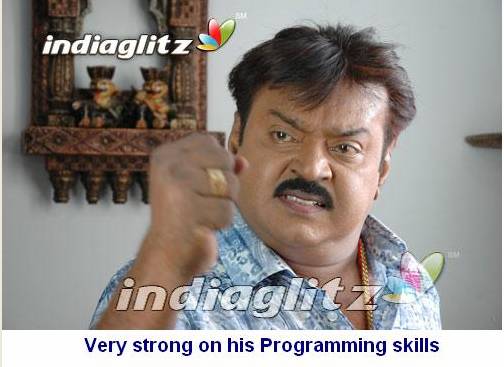
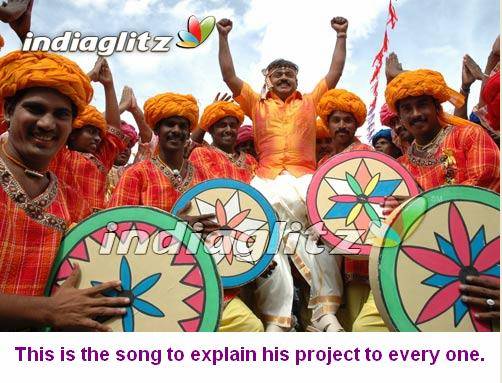
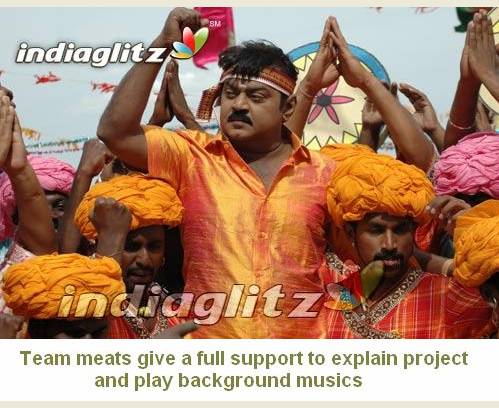
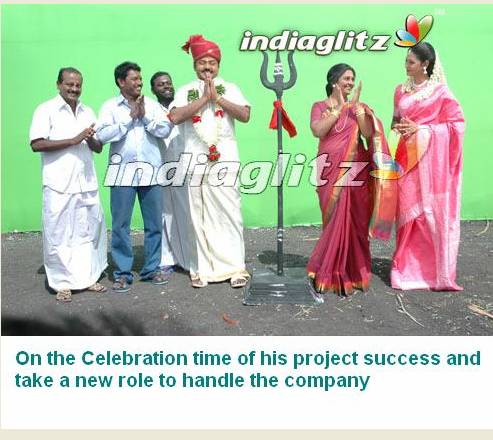
The problem of terrorists is looming everywhere in the country. Experts from all over domains are thinking hard to solve the problem. Half the problem will be solved when there is a simple way of nabbing them. It is here that our hero Mr.Vijayakanth from the Tamil silver screen comes to our rescue. He has taken a vow to develop software for nabbing the terrorists. Here is how he proceeds. His various steps are shown easy to follow images that figure in his film "Vijayakanth, IT Super Star!" Here goes:


Now an urgent request. Never reveal to our Vijayakanth that it was I, who put up this post. I am putting on a disguise just in case.


Regards,
Dondu N.Raghavan

Computer illiterates around the world

Computer illiterates around the world making you appear cleverer by comparison

For people moaning about their helplessness with computers, here are some examples showing the state of knowledge in others. You are definitely better off than they are, given the fact that you have succeeded in coming to read this page! Here goes:

True telephone conversations recorded from various Help Desks around the U.K

Helpdesk: What kind of computer do you have ?

Customer: A white one...

> > ====

Customer: Hi, this is Celine. I can't get my diskette out.

Helpdesk: Have you tried pushing the button ?

Customer: Yes, but it's really stuck.

Helpdesk: That doesn't sound good; I'll make a note ..

Customer: No ... wait a minute... I hadn't inserted it yet... it's still on my desk... sorry .

> > ====

Helpdesk: Click on the 'my computer' icon on to the left of the screen.

Customer: Your left or my left ?

> > ====

Helpdesk: Good day. How may I help you ?

Male customer: Hello... I can't print.

Helpdesk: Would you click on start for me and ...

Customer: Listen pal; don't start getting technical on me ! I'm not Bill Gates damn it !

> > ====

Hi good afternoon, this is Martha, I can't print. Every time I try it says

'Can't find printer'. I've even lifted the printer and placed it in front

of the monitor, but the computer still says he can't find it...

> > ====

Customer: I have problems printing in red...

Helpdesk: Do you have a colour printer ?

Customer: No.

> > ====

Helpdesk: What's on your monitor now ma'am ?

Customer: A teddy bear my boyfriend bought for me in the supermarket.

> > ====

Helpdesk: And now hit F8.

Customer: It's not working.

Helpdesk: What did you do, exactly ?

Customer: I hit the F-key 8-times as you told me, but nothing's happening.

> > ====

Customer: My keyboard is not working anymore.

Helpdesk: Are you sure it's plugged into the computer ?

Customer: No. I can't get behind the computer.

Helpdesk: Pick up your keyboard and walk 10 paces back.

Customer: OK

Helpdesk: Did the keyboard come with you ?

Customer: Yes

Helpdesk: That means the keyboard is not plugged in. Is there another keyboard ?

Customer: Yes, there's another one here. Ah...that one does work !

> > ====

Helpdesk: Your password is the small letter a as in apple, a capital letter V as in Victor, the number 7.

Customer: Is that 7 in capital letters?

> > ====

A customer couldn't get on the internet.

Helpdesk: Are you sure you used the right password ?

Customer: Yes I'm sure. I saw my colleague do it.

Helpdesk: Can you tell me what the password was ?

Customer: Five stars.

> > ====

Helpdesk: What antivirus program do you use ?

Customer: Netscape.

Helpdesk: That's not an antivirus program.

Customer: Oh, sorry...Internet Explorer.

> > ====

Customer: I have a huge problem. A friend has placed a screensaver on my

computer, but every time I move the mouse, it disappears !

> > ====

Helpdesk: Microsoft Tech. Support, may I help you ?

Customer: Good afternoon! I have waited over 4 hours for you. Can you

please tell me how long it will take before you can help me ?

Helpdesk: Uhh..? Pardon, I don't understand your problem ?

Customer: I was working in Word and clicked the help button more than 4

hours ago. Can you tell me when you will finally be helping me ?

> > ====

Helpdesk: How may I help you ?

Customer: I'm writing my first e-mail.

Helpdesk: OK, and, what seems to be the problem ?

Customer: Well, I have the letter a, but how do I get the circle around it?

Taken from this URL:

The abovementioned is from a Proz.com posting that was initiated by me. My fellow translator Parrot added this gem:

Customer: Hello, I need to replace a broken part of my computer.

Help desk: Which one?

Customer: The glass holder.

Help desk: The WHAT???

Customer: You know, that tray with the hole in the middle that pops out when you push the small button...

Friday, March 17, 2006

My 2 cents about dealing with the clients - 4

I spoke thus in the first part of this series dealing with client relations: "Be clear about the rates. Many translators lose out on this aspect. It may be true that the job is easy for you and you love this work. But there is no need for you to tell this to the client. If you do so, he will start behaving as if he is doing you a favor.

You have a skill to market, that is to say translation. The client does not have it. Period. Even if he were to have it, he just cannot afford the time taken to do the translation himself. That's why you are there. This is the true position. Now all that remains to be done is the pricing of your services. Some clients may try this ploy: "This is a job after your heart and it is actually an art. Trying to haggle is just cheapening this art, don't you think so?" Allow no one to pull the wool over your eyes. The client is solely interested in reducing his costs. To such clients I gently say, "Sir, you are a sensitive soul and it does credit to you, I am content to be an admirer of mammon". Beyond this no client had proceeded, as in truth he is a keener merchant than I am!

Let's come to another ploy by the client. A 10-page paper may contain some sentences repeated more than once. This happens mainly in patents, wherein the same idea may be repeated with different numerical values. Especially in the patent claims section, there will be full paras repeated from the earlier descriptions. When the client is aware of this, he will expect you to charge less for repetitions and at times even forgo payment for the same, for the simple reason, that the work is made easy for us. I never allow myself to fall for this line of reasoning and will reject their reasoning outright. Well, the repetitions are not my concern. I did not bring them about. What I have is a paper and if the client wants it translated, he better pay me the full amount. My price is based on the rate per word. There are softwares available for counting words in various types of files. I always use this mode of charging. This too is susceptible to many changes depending on circumstances but they are beyond the scope of this posting. In short, the client's reasoning on this account is not acceptable.

But do remember to be polite while mouthing all these things and keep smiling, while being firm at the same time. Even if the client were not to agree to these things, always make sure that you keep the door open for a later entry to the client's office. Who knows what the future will bring?

It is also important to shape your prices to suit the client's needs. For example, there was this client, who had a 100 page document containing around 30,000 words and just 3 days' time before he had to understand it and take action. If one were to translate it in toto, at least 20 days were required. He just did not have that much time. So he asked me whether I could go through the document and give him a true picture of its contents. This called for reading out the document and then giving the client an oral presentation of its contents. I went to his office for 2 days in succession and gave out oral summaries of various chapters to a team of 4 different domain people. For this I cannot charge in terms of words. I resorted to hourly rate plus taxi charges to and fro plus coffee, tea, lunch etc as applicable from time to time. Under this regime my minimum billing will be for 2 hours per assignment. I did the work to the client's satisfaction. As this was a first time for me, I gave one disclaimer at the outset, namely, the time period required for the work depended on the client's capacity to absorb things quickly. And this is beyond my control.

Some of you may frown on my mentioning tea, coffee, lunch etc. My friend had to face a lot of embarrassment just because he didn't talk these things out beforehand. He was taken to Trichy, where he had to stay in the same hotel as the client but had to pay his own bills. He ended up with a net loss of Rs.200 (that was in 1981).

How does one calculate the hourly rate? I have the following formula for this. I know how many words I can turn out per hour. This multiplied by my word rate will give my hourly rate. That's all.

Rest in coming installments.

Regards,
N.Raghavan

Friday, February 03, 2006

Translator or otherwise, this is important

Health - Recognizing a stroke!

Maybe you are in perfect Health to bother about this. But then, you may have an opportunity to save a family member, friend or stranger.

During an outdoor dinner at a seaside resort near Chennai, India, a friend stumbled and took a little fall - she assured everyone that she was fine and just tripped over a brick because of her new shoes. They got her cleaned up and got her a new plate of food - while she appeared a bit shaken up, Lakshmi (name changed) went about enjoying herself the rest of the evening.

Her husband called later telling everyone that his wife had been taken to the hospital - (at 6:00 pm, Lakshmi passed away). She had suffered a stroke at the dinner- had they known how to identify the signs of a stroke perhaps Lakshmi would be alive today.

It only takes a minute to read this:

A neurologist says that if he can get to a stroke victim within 3 hours he can totally reverse the effects of a stroke...totally. He said the trick was getting a stroke recognized, diagnosed and getting to the patient
within 3 hours which is tough. There is nothing more life saving than getting the patient to the hospital in the FIRST ONE HOUR! The Golden Hour it is now known as to Doctors and emergency attendents alike!

RECOGNIZING A STROKE

Remember the "3" steps. Read and Learn!

Sometimes symptoms of a stroke are difficult to identify.
Unfortunately, the lack of awareness spells disaster. The stroke victim may suffer brain damage when people nearby fail to recognize the symptoms of a stroke.

Now doctors say a bystander can recognize a stroke by asking three simple questions:

1. *Ask the individual to SMILE.

2. *Ask him or her to RAISE BOTH ARMS.

3. *Ask the person to SPEAK A SIMPLE SENTENCE (Coherently) (i.e. . . It is sunny out today). If he or she has trouble with any of these tasks, call
Emergency immediately and describe the symptoms to the dispatcher.

After discovering that a group of non-medical volunteers could identify facial weakness, arm weakness and speech problems, researchers urged the general public to learn the three questions. Widespread use
of this test could result in prompt diagnosis and treatment of the stroke and prevent brain damage.

A cardiologist says if everyone who gets this e-mail sends it to 10 people;
you can bet that at least one life will be saved.

BE A FRIEND AND SHARE THIS ARTICLE WITH AS MANY FRIENDS AS POSSIBLE, and you could save their lives.

Regards,
Dondu N.Raghavan

Wednesday, December 28, 2005

Penny wise pound foolish

The other day a new client of mine called me to his place for discussions. It seems he wanted a menu translated from English into German as well as into French. He represents a 4-star hotel, here in Chennai.

The requirement for translation into French was straight forward enough. He wanted the entire menu translated. But for translation into German he wanted to economize. He told me that the new menu in English was just a slight modification of the existing menu, whose German translation was already with him. I was to translate only the modifications. I asked him to give the modifications in a different color font. He agreed and emailed me the English menu.

I took up the French translation first and sent him the finished translation. Then I took up the second part of the assignment and then sent him the German translation duly incorporated in the original English menu. All he had to do was to copy paste from the existing German version the entries into the new menu so that he can get at the revised menu in German.

Here he ran into rough weather. It seems that the new menu in English is a fully revised one and bore no resemblance to the original version in matters of sequence or even formatting. He quietly sent me the old German version and asked me to insert the suitable German translations into the new revised menu.

I refused. I told him that this is entirely a different work and as the German words are already existing and my work was just to hunt them and put them in proper places in the new English menu, this work was not susceptible to straight forward word counting. I suggested that I come to his place, sit with the manager in charge of the menu and put the words in proper places, carrying out any further modifications in the format as might be found necessary by the manager at that time. After hearing my hourly rates and learning about the minimum billing for two hours as well as other conditions such as to- and fro taxi fare plus food while working, he became quiet. Though the conversatin was being conducted over phone, I could almost hear his mental gears moving around and meshing into place. He quietly asked me about the possible additional cost were I to translate the entire menu into German, not bothering about the old translation. Here there was no problem as I was already aware of the full word count of the English menu, on which I based my bill. The difference was not much and he said he would let me know. That was yesterday. He is yet to give me his decision. But the reason for my posting this rests elsewhere.

Trouble comes with clients, who try to cut corners and economize. I will not blame the person negotiating with me as he is just an employee of the organisation in question and his instructions are just to get the work done at the cheapest price. So the client goes into rigmaroles to restrict the work. He forgets that by just getting the entire package translated, he saves a lot in terms of time and avoidable botheration. Let me give a few examples.

One officer negotiating with me said that his Director knows French and at a pinch he can very well look after the visiting French expert. Hence I should reduce my rates. I just took a few minutes to demolish his assumption. The French expert was supposed to work with the Indian workers giving them training. Did the officer expect that the company's top official will sit with them and do interpreting? I told the officer that that person was expected to manage the company on the whole and not lose himself in a lower-end job as far as he was concerned. The officer quickly agreed and we proceeded with the rate negotiation.

In another firm, there was a bunch of German drawings. The officer entrusting the work to me marked a few words in each sheet and told me to translate just them as he undestood the other words. I obliged without argument as it was a job paid on an hourly basis, finished the work as instructed and got paid. The trouble was, the concerned officer left the company soon afterwards. His successor was not so knowledgeable and he wanted the meaning of words that were left untranslated. You guessed it correctly. Another work for me. Needless to say, the company ended up paying me much more.

There was this client, who expected me not to charge for interpreting while accompanying him and the visitor to a five-star hotel for wining and dining. He was of the opinion that I should be content with five-star food. I told him politely that I am not enamoured of five star food, in fact was just fed up with them! (pun intended!). Either he pays me for my time or I do not go. He said that he would manage the hotel visit himself and asked me to come for technical interpreting the next day. But things took a differeent turn the next day. The visitor had eaten something, which was not suitable for his stomach. He was an European and there are many spicy Indian foods about which I always caution the visitor. Well, in this case I was not there. The visitor had bouts of vomiting and loose motion throughout the next day. He had to be taken to a doctor, who put him on drips. Naturally I sat by his side and interpreted between him and the doctor, as well as the pretty nurse, whom the expert found to be nice. However the client was not amused, as the expert's daily rate was way higher than my interpreting fees for the three hours spent at the five-star hotel. The client became very thoughtful afterwards.

Then there are clients not wishing to pay for numbers, proper nouns, repetitions etc. They just serve to give concrete examples of penny wise, pound foolish!

Regards,
Dondu N.Raghavan

Thursday, December 01, 2005

My 2 cents about dealing with the clients - 3

What to write and what not to write as well as how to express oneself and how not do it in letters to a prospective client are all important things and you should not lose sight of them. As already mentined in my previous post, I have developed a sort of letter template. Yet, I do modify it now and then for the sake of variety.

For example, once I introduced myself as an electrical engineer taking up translation work in deviation of my usual introduction as a translator with engineering specialization. In reply, I got this wonderful letter:

"Sir,

With reference to your application for the post of Sales Engineer, we request you to attend an interview on bla, bla, bla.

Regards and all that."

At first I was flabbergasted. Nevertheless, I met the CEO of the company in question and explained to him about the mix-up. He was initially amazed and then burst out laughing. And it seems wonders never cease. He had a German text, which he had initially kept aside for the moment. As I was already there, he gave the text to me for translation. So nothing was lost. Here I learnt two lessons. One is to put more emphasis on my being a translator and mention the fact of my engineering experience only as a support to my translation activities. The other lesson is to never miss an opportunity of meeting a client, however hopeless the situation might appear to be.

Letters should be brief. Yet they should not miss anything important. And they should kindle the client's curiosity. They should focus on the client's requirements. You should always address the letter to the CEO of the firm. All my letters were hand-written and this fact gave them a touch of originality. I lived till July 2001 in New Delhi, the Capital of India. All my translations were delivered in manuscript form. In the bargain, I wrote thousands of pages and my handwriting improved a lot.

OK, you got a letter from the company to come for a face-to-face discussion. Now what?

Before going further, let me make one thing clear. Whatever I mentioned so far and am going to mention in subsequent instalment on this topic are applicable to any venture. Since I am tapping my personal experiences, the activity of translation is emphasized, that's all. It is for the readers to customize the points suited to their requirements.

Now you have entered the company premises. You are asked to wait as the CEO is busy. Even awaiting the call is an art. Some people needlessly become tense. They resort to nail-biting, looking often at the watch etc. Avoid all these manifestations of nervousness.

For just such occasions I go prepared. I take a book with me. I will sit calmly and be reading the book. Time will fly. While reading the book, I will be rehearsing in my mind as to how I could present my case to the CEO. I will think of the possible questions that might be flung at me and rehearse the answers to the same. I will create a few openings of my own and try to keep the conversation under my control.

Keep your eyes open and have a good look at the enterprise's environment. Keep a cheerful face and smile a lot. You don't lose anything by being cordial to all. It is absolutely essential to get as much goodwill as possible. Hence practise this appproach right from the beginning.

Nowadays smoking is strictly prohibited in offices. But the situation was entirely different in the eighties. Whenever the CEO offered me a cigarette, I never refused the first time. Just for these occasions I had fixed myself a quota of 12 cigarettes per year. The moment I accept the first cigarette, rapport is immediately struck between me and the CEO. Here is a small point to remember. An average smoker lives always with a compulsion to kick the habit. Were I to refuse the first cigarette, I appear to him as a show-off having a will stronger will than his. This will not do. Hence my strategy. Anyhow, nowadays such occsions become rarer and it is good.

Listen carefully as the CEO speaks. Understand the company's needs. Only then you can talk about your services in a confident manner.

In my particular case, a typical CEO will always be curious to know as to how an engineer is also a linguist. It is so because, an average engineer is not much good in languages. Well, this is a case of hasty generalization but then this impression persists. Hence you should talk in fluent English. Never neglect anything as being too obvious and/or too small. Don't forget that all these small things join together to create a good impression about you.

Exercise utmost care while agreeing to deadlines. For the client, his work is always urgent and he would like to get the translation yesterday itself. Do not be cowed down to accept unreasonable deadlines. You should keep in mind the other commitments agreed to for other clients. You can translate only so much words per day (2000 words in my case). While declining to accept the deadline as demanded by client, don't forget to be polite.

How do I handle such situations? Suppose I can comfortably give a deadline some 5 days hence. I will ask for 7 days' time. If the client harps on the urgency, I will offer to do the job for 5 days by working extra hours per day. I will also be asking for a premium of 20% over and above the normal price. More often than not, the client will suddenly realize that his job is not so urgent after all. If he is really in a hurry, he may accept the conditions for extra payment and it should not be unwelcome to you. That's all. But one thing, you should honour the deadline agreed to. There can be no two opinions about this.

I will talk about rate negotiations in my next instalment of this post.

Regards,
Dondu N.Raghavan

Saturday, November 19, 2005

Loss of friend

It is not often that I spend time on forwarded mails. But today's mail was an exception. My friend Ravi Balasubramanian sent me this account in an email. I was quite moved by it.

I was reminded of the Valmiki Ramayana. Sage Valmiki saw a hunter shooting down one of the two Krauncha birds. On seeing the lament of the surviving bird, the sage is moved to utter a curse on the hunter banishing him to wander without abode all the days of his life.

He regretted immediately his loss of temper. But then he was intrigued by the wording of the curse. It had come out as a metered verse. As he was pondering about this, Sage Narada appeared before him and told him that the incident was as intended by God and that he should now write the story of Srirama using the same meter. Thus all the 24,000 verses have the same meter in the Valmiki Ramayana.

Now to the pictorial account below. By the way I have rendered this in Tamil too in my Tamil blog.

1. It was a gloomy Saturday afternoon. A flock of birds was spending great time searching for food and playing on the main road. Out of the sudden, a big truck sped through... sad thing had happened again.


2. Birds can feel too. Although this bird had already died, another bird flew over to her immediately, just like a family member, unable to accept the truth.


3. Not long after that, another car stormed in causing the dead bird's body to whirl with the wind. The spouse noticed the movement. As if she was still alive, he quickly flew beside her again.


4. He stayed beside her and yelled ... "WHY ARE YOU NOT GETTING UP!?"


5. Unfortunately, she's no longer able to hear him. In the meantime, he's trying to lift her up.


6. He, of course, was unable to bear the burden. Another car soon passed by. He quickly flew off. Once the car had gone, he came down again.


7. Although other birds told him its useles, he never gave up. He was trying his best to lift her up to see her flying again. Another car passed by, her dead body whirled again as if still alive and trying to fly.


8. He had used all of his energy, however...
The photographer said he couldn't shoot any longer. The photographer was so worried that the living bird was going to get hurt by passing cars. So he picked up the dead bird and left it at the roadside. The live one still lingered at a nearby tree as if crying with his singing and refused to leave.

Do humans have the same feelings nowadays? I wonder.

Regards,
Dondu N.Raghavan

My 2 cents about dealing with the clients - 2

My suggestions are for freelance translators only. If you are employed as full-time translator, you will not want for work, if your employer knows what is good for him. As already mentioned in my post about reverse translation, I worked as a full-time translator in Indian Drugs and Pharmaceuticaly Limited (IDPL).

From where can one locate clients? From anywhere is my short answer. Let me elaborate with a few concrete examples from my own experience.

It was 1982. I was proceeding by flight to the Hyderabad Unit of IDPL for some very urgent translation assignment. The flight took one hour. I was leafing through The Hindustan Times provided by the Indian Airlines as courtesy to the passengers. As I was scanning idly the situations vacant page, one advertisement caught my attention. A television antenna manufacturer had advertised for the post of an accountant. Definitely of no concern to me but the fact that it was having German collaboration was of interest. I dashed off a letter to the Chief Executive Officer of the company in question and posted it as soon as I reached Hyderabad. It was a handwritten letter. By the time I came back to New Delhi, I received word from the company to come for an interview. It was an eye-opener for me. From then onwards I started looking out for more such opportunities.

For example, there is a government publication appearing every month. It contains the list of government-approved foreign collaborations. I used to consult this and prepare a list of Delhi-based companies whose German/French collaborations had been approved. Then I would dash off a handwritten letter to the CEO of the company in question. Further developments such as getting replies, having face-to-face discussions with the company directors, turning out good translations etc followed with clockwork regularity in quite a few cases.

Another mehtod would be keeping the eyes and ears open. Whenever new persons are introduced to me, I would talk to them about themselves and they liked such talks. I would know about the companies for which they work and get details of possible German/French connections of the firm. Rest is as already described. Visiting Indo-German and Indo-French Chambers of Commerce for preparing a list of their Delhi-based members is also part of such exercise.

So far so good, let us see now about the drafting of such letters. It is by God's Grace that I found an effective formulla in the first letter itself written by me to the antenna manufacturer way back in 1982. There are just a few changes in the content, especially in the numerical values such as years of experience, age etc. Let me reproduce that letter here.

Sir,

Sub.: German/French translation services

I am a freelance German/French translator with 7/4 years' experience in the above languages. Being a graduate electrical engineer having worked for 11 years in that capacity, I specialize in translating all types of technical literatures as well as interpreting for the visiting technical experts speaking only German or French.

Given your German connection, I feel that you will be in need of the above services in your line of work from time to time. In case you are interested, we can have a more detailed discussion on the subject.

Regards,
N.Raghavan

In those days I did not even have a telephone. Hence all communications took place by letter. Once I obtained telephone connection in 1990, I would mention the telephone number as well. I am mentioning this here just to show that the absence of facilities should not deter one.

Let me describe the response to the above letter. I was called for discussion and I was subsequently entrusted with their German translation work. With time I got their French translation jobs too. During the first discussion the CEO told me that the fact of my being an engineer as well as a translator intrigued him and he wanted to know more. Whatever it might be, the main thing is the getting of work.

We should also be clear as what not to write and speak during subsequent discussions. Before concluding this part, I would like to mention that with the advent of the Internet things are much more easier. But the basic principles remain.

Regards,
Dondu N.Raghavan

Thursday, October 06, 2005

Entertainment from machine translation

It is unbelievable. I give below as example, a machine translation of the Web page of the German weekly, Der Spiegel". The news item presented here deals with the reaction of the Nobel prize designate M.Yves Chauvin to the news of his winning the Nobel prize. See: http://babelfish.altavista.com/babelfish/trurl_pagecontent? lp=de_en&url=http%3A%2F%2Fwww.spiegel.de%2Fwissenschaft%2Fme nsch%2F0%2C1518%2C378142%2C00.html

Der französische Chemiker Yves Chauvin soll den Nobelpreis erhalten - und findet die Auszeichnung nicht erfreulich, sondern "peinlich". Der 74-Jährige sagte, er werde nicht zur Verleihungszeremonie kommen und wolle weiterhin zurückgezogen leben.
The French chemist Yves Chauvin is to receive the Nobelpreis - and does not find the honor not pleasing, but "embarrassingly". The 74-Jaehrige said, he to the award ceremony not to come and wanted further withdrawn to live.

Normalerweise reagieren Wissenschaftler mit atemloser Freude auf die Verleihung des Nobelpreises - zumal der Anruf aus Stockholm für die meisten überraschend kommt, da die Namen der Preisträger kaum vorhersehbar sind. Umso erstaunlicher war die Reaktion von Yves Chauvin, der heute von der Schwedischen Akademie der Wissenschaften als einer der drei diesjährigen Chemie-Nobelpreisträger genannt wurde.
Normally scientist reacts with breathless joy to the award of the Nobelpreises - particularly the call from Stockholm for most surprisingly comes, since the names of the winners are hardly foreseeable. The reaction of Yves Chauvin, which today of the Swedish Academy of Sciences as one of the three chemistry Nobelpreistraeger of this year was called, was the more amazing.

"Mir ist dieser Preis ausgesprochen peinlich", sagte der 74-jährige Ehrendirektor des Institut Français du Pétrole (IFP)in Rueil-Malmaison. "Meine Entdeckungen sind schon 40 Jahre alt, und ich bin ein alter Mann." Gefreut habe er sich keinesfalls. "Stockholm hat mich vor einer Stunde angerufen", sagte Chauvin den Reportern, die seine Wohnung in der westfranzösischen Stadt Tours belagerten. "Man hat mir viel Glück mit der Presse gewünscht. Ich beginne zu erkennen, was damit gemeint war."
"me this price is expressed embarrassing", said the 74-jaehrige director of honour Institut of the Français you Pétrole (IFP)in Rueil Malmaison. "my discoveries are already 40 years old, and I am an old man." Was not pleased it itself under any circumstances. "Stockholm called, said me one hour ago" Chauvin to the reporters, who besieged its dwelling in the westFrench city route. "one wished me much luck with the press. I begin to recognize, what was meant with it."

Seine Forschungen, für die er jetzt den Nobelpreis erhalten habe, lägen Jahrzehnte zurück. "Ich hatte genügend Zeit, das zu verdauen", sagte Chauvin, der seine ebenfalls mit dem Nobelpreis ausgezeichneten US-Kollegen Robert Grubbs und Richard Schrock lobte. "Ich wusste, dass meine Erkenntnisse wichtig waren. Ich habe den Weg bereitet, aber es sind meine amerikanischen Kollegen, die ermöglicht haben, dass ich diesen Preis heute bekomme."
Its research, for which it had received the Nobelpreis now, would be past decades. "I had sufficient time, to digest", said Chauvin, which likewise praised its with the Nobelpreis distinguished US colleague Robert Grubbs and Richard Schrock. "I knew that my realizations were important. I prepared the way, but there is my American colleagues, who made possible that I get this price today."

I can go on ad nauseum, but I am sure the above paras more than suffice. I shudder to think about the naive assumption of people pinning their faith on machine translations.

Regards,
Dondu N.Raghavan

Tuesday, September 27, 2005

My 2 cents about dealing with the clients - 1

I have been practising the profession of translation from 1975 onwards. I guess I can say a few words on the ways and means of attracting clients. One thing is certain. One should know what one wants and should have clear ideas as to how one goes about getting it. Once this is achieved, half the battle is won. The rest is just doing things as per plan.

1. The most important thing is identifying and capturing new clients. This is an ongoing process. A separate post is required to talk about the ways of reaching up to a potential client. The aspiring translator has to write to him. What to write and whom to write and so on form the subject matter of the second part of this post.

2. Know thyself. Be clear about your capabilities and non-capabilities. If you promise impossible things and fail to deliver, your credibility will be the casualty. For example, if the client mentions a deadline for a given job, you should agree only if it is possible for you to meet it. Nine times out of ten the client will just be bluffing about the urgency of the job. If you are browbeaten into accepting the deadline and are unable to meet the deadline, you have only yourself to blame. So, this aspect will form the subject matter of a separate post.

3. Be clear about the rates. Many translators lose out on this aspect. It may be true that the job is easy for them and they love this work. But there is no need to tell this to the client. If you do so, he will start behaving as if he is doing you a favor. So another post for this aspect.

4. Do not for God's sake accept at face value whatever the client says. Some clients are in the habit of saying that they have thousands of jobs in the pipeline and expecting to get some reduced rates from you. This too will just be a bluff. Most probably the job in hand will just be a one-time job. No further work can be expected in the near future. Their stake is in lowering the price. I will tell you how I deal with just ploys in one of my future posts.

5. Do not give unnecessary details. For example, you are working full-time in a company. This freelance translation is just a side-business for you. In such a scenario, you cannot be too careful. You should keep the two activities in water-tight compartments. You should never tell the translation clients as to where you are working full-time and the full-time employer should not know that you are working freelance elsewhere. This is an extreme example and I will elaborate on it in a later post.

6. Be always accessible. Keep your communication channels open. In the present-day setup it is easy to execute. We will deal with this at the appropriate time.

7. Always try to make the best of your situation, whatever it might be. Till 2002, I had no computer. Now I do. I converted both the situations to my advantage. More about it later.

8. Doing the translation is just half the job. Collecting the money is equally important. I will come to this later.

How am I qualified talking about these things and more? I practised them myself from 1975 onwards. At present I am a very successful translator in Chennai, India. No false modesty shall hold me from saying this.

regards,
Dondu N.Raghavan

Monday, September 26, 2005

Disturbing thoughts: Is translation a non-value activity?

At times I am asked to come to the client's premises to do translations, whenever the work is of confidential nature and/or is too cumbersome to handle at home. In the case I am going to cite here, there were bundles of French technical drawings in hard copy and I had a merry time translating them.

Enough of background. The contact officer and I were discussing the company's translation requirements. He told me that his bosses wanted him to make do without translation, as the work was at a preliminary stage and one was not sure of getting the order. Hence cost has to be cut. Here the offending word comes in. The bosses said to him that translation is a "non-value service", as it does not bring in money directly. Though taken aback, I was delighted with the opportunity to talk and talk about translation.

My arguments in a nutshell:
Translation is vital, as the client has to understand in the first place the principal's requirements expressed in another language. At this point of time, it is an investment and as is the case in all investments, there can be no 100% guarantee of getting fat returns. After all, the principal may not like the client's rates and not give the order. It is not the fault of translation. Without translation no meaningful offer can be given.

The above mindset of a typical client results in there being no budget provision for translations and in the translation activity not finding a place in the bar charts. Everybody assumes that translation involves just copying into another language and it is just common sense. This is an important drawback for projects involving two parties speaking different languages. Poor fellow, the contact officer had a glazed look after nearly 30 minutes of my onslaught of words.

A few words about the situation obtaining in India. Indian companies have English as the working language and this language is known to many people in Europe, especially in the German and French speaking countries. The top people going to Europe for negotiations get by almost without interpreters and if at all any interpreter is required, the host looks after that. Foreign visitors to India do speak acceptable level of English and more often than not interpreters are not required.

This situation is the main reason why our entrepreneurs are lulled into a sense of false security. Because they were able to pull along without interpreters, they think that their engineers and other officials in the next rung of management can do the same thing. Unfortunately this does not apply to translations of the vast documentation and they are obliged to hire us. But this is bothering them and hence they give statements such as those indicating that translation is a non-value activity. They try to use this argument to browbeat us translators into accepting low rates. This cuts no ice with me, as given half a chance, I start waxing eloquent in favour of my profession. And I stand firm and manage to get good rates.

The reason for this posting is to share my thoughts with my friends in a sympathetic atmosphere and get more points in favor of our case. I request my translator / interpreter colleagues to give more inputs on this question that touches us all.
Regards,

N.Raghavan

Saturday, September 24, 2005

Life is very beautiful - 2

When I started learning German, a remarkable thing happened. Till that period whenever I watched a Second World War film, I was seeing the Germans as the bad guys. But once I started learning the language, I started becoming sorry for them. That is the magic of learning a new language.

I was fortunately posted to Madras in 1974. In 1975 I enrolled in the French class of Alliance Francaise. My professor was Madame Sharada Lartet, an Indian married to a Frenchman. Believe me, she was wonderful. Here too I repeated my German experience. I completed all the lessons of the Mauger Rouge - 1 within the first three months after the start of my course in July 1975. With a feeling of deja-vu I started taking books from the library. Then I purchased Mauger Rouge - II and completed that as well within the next month. This was folloed by Mauger Rouge - III. It was really hectic in those days. Sharada encouraged me in all my endeavors. I started speaking French within the first three months. I passed the Certificat exam in April 1976.

Pre-diplome class started July 1976 and I was fortunate to be again in Sharda's class! But catastrophe struck at the end of the first trimester. Our class was cancelled as there were not enough students in our session. We were asked to come to another session but it was not convenient for me. Here Sharada rushed to my aid. She packed me to the third trimester session for students writing pre-diplome exam in Dec 1976. I saved one trimester in this manner.

But wonders did not cease. After one week of this session, the new Professor Maureau took me aside and said that my level was far superior to that of my fellow students. He and Sharada consulted together and Sharada sent me to the third trimester of the Diplome class being conducted by her husband Professor Lartet. I gained three more trimesters in this manner. Dec 1976 I passed Diplome with the mention "tres honorable." Then followed the class for the Diplome Superieur in July 1977, which I passed in April 1978.

Looking back, I wonder what made me tick. Without the help of Sharada I would have been nowhere. She came in my life like an angel. I was overwhelmed with her kindness and was also scared on seeing her trust in me. This made me work hard, at least to justify her faith in me.

It was in this manner that I got German and French, from which I have been translating respectively from 1975/1978 onwards. This has given me a fine opening as I start negotiating with a prospective client. I tell him that I have 23 years' experience as graduate electrical engineer, 30 years as German translator and 27 years as French translator. Thus I have a cumulative experience of 80 years whereas I am just 59 years young. The client would invariably ask "how did you manage it?" and I will say with a straight face "Overtime, sir". This always broke the ice and further negotiations proceed smoothly.

Life is really so beautiful!

Regards,
N.Raghavan